24.9.12

Vocabulary: British and American English

A2, B1, B2, (C1)

There are many differences between British and American English words, You are going to learn some of the most common ones. Activity time: 15 minutes to 1 hour

Task:  Look at the 12 pictures on the right.

1  Can you name the different things in the pictures? Do you know if your word is American or British English? 

2  Go to the interactive wordlist and check your answers. NB You have two search options - British to American or American to British.

3 If you want to learn some more British and American English differences, do the quiz. If you're not sure of the answer, the interactive wordlist can help you. 

Go to the interactive wordlist here.
Go to the quiz here.
Check your answers to 1 and 2 here. 


13.9.12

Video: The Secret Powers of Time

(B1), B2, C1, C2

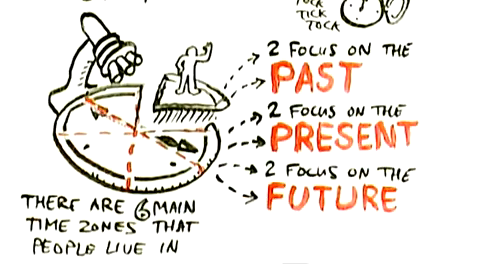
Philip Zimbardo  is a Professor of Psychology at Stanford University. In this talk from the RSA site, he describes how our different perspectives of time influence our personalities, our relationships, and our actions. The talk is illustrated by a cartoonist, who reproduces the key points with pictures and text. Video time: 10 minutes 9 seconds. Activity time: 20 minutes to 1 hour.


Task:  1 Look at the illustration above. What kind of people do you think live in past, present or future time zones? How is their behaviour different? Do you think we live in different time zones at different ages?

2 Watch the video to see how Philip Zimbardo answers the questions in 1. Pause the video where necessary  to look at the illustrations and relate them to what the speaker has just said.

Go to the video here.


12.8.12

Video: Richard Branson's secrets of success

B1, B2, C1, (C2)

Richard Branson, creator of the Virgin brand, is one of Britain's most successful businessmen. In this video activity from the British Council Learning English site, you will hear him talk about what makes a successful entrepreneur. You will also do four exercises to test your general comprehension and to learn some idiomatic expressions. Video time: 3 minutes. Activity time: 20 to 45 minutes.

Task: Go to the activity page and
1 Watch the video
2 Go down the page and do tasks 1 and 2. Watch the video again if necessary.. Click on rhe red button at the bottom to check your answers
3 Do tasks 3 and 4. To check your answers, listen to the video again or click on the red button.

Go to the activity here.


6.7.12

Pronunciation: The return of the schwa!

A2, B1, B2

Our post of 29th October 2010 explained that the schwa was the most common sound in the English language. Understanding it is important for your listening comprehension, and it can also help your pronunciation. In this exercise from the BBC Learning English site, you will do some more exercises to practise this sound. Activity time: 15 to 35 minutes.

Task: 1  Read the introduction (3 parts) and listen to the example words and sentences. Repeat what you hear.
2  Open the pdf and do the two exercises on pages 2 and 3.
3  Open the mp3 audio file and listen to the pronunciation of the words and phrases from 2.  Repeat what you hear. Does the pronunciation correspond to your answers in 2?
4  Check your answers on pages 4 and 5 of the pdf.

Go to the introduction here.
Go to the pdf exercises here.
Go to the mp3 audio file here.


5.7.12

Expressions: Asking and giving tourist advice

A2,  B1


In this activity from the Blair English site, you will learn and practise some expressions for asking and giving advice about things to do on holidays or business trips. Activity time: 10 to 30 minutes

Task: 1 Read the model conversation: "Visiting a different country" 2 Complete the expressions in the quiz that follows. Then click on the button at the end of the exercise to check your answers.  

(If you're using the "Chrome" browser, you can hear all the expressions, after completing the quiz. Just click on the "Pronunciation" button )


Go to the activity here. 


20.6.12

Video: Bill Gates and our zero carbon future

B1, B2, C1, C2

In recent years, Microsoft creator Bill Gates has focused his time and money on solutions to help the world's poorest people.  In this video from TED, he turns to the subject of energy. He talks about the need to create a zero-carbon planet and describes what efforts are necessary to achieve this.
Video time:19 minutes (followed by 8 minutes of questions and answers). Activity time: 30 minutes to 1 hour.
(NB there are subtitles available in English and in many other languages. Just put your cursor on the video screen and you will see the subtitle menu)

Task:  1 Watch the first 19 minutes of the video and discover:

- why the energy question is important for the world's two billion poorest people
- why we have to reduce carbon emissions to zero
- the meaning of the equation CO² = P x S x E x C
- what "miracle" is needed, and how this is different from other recent "miracles"
- the disadvantages of fossil fuels, nuclear power and renewable energies
- an innovation in nuclear power that could change the whole industry
- what results we need to see (a) in 2020  (b) on 2050 


2 To check your answers, read the transcript ("Show transcript" menu just under the video screen)

Go to the video here.